
Cross-Border Payments Roundup - April 2026
Welcome
Welcome to the latest edition of Cross-Border Payments Round-Up, a biannual newsletter sharing updates on the progress on the G20 Roadmap for Enhancing Cross-border Payments.
The Financial Stability Board (FSB) continues its work on action items across three priority themes, underpinned by five further generic actions.
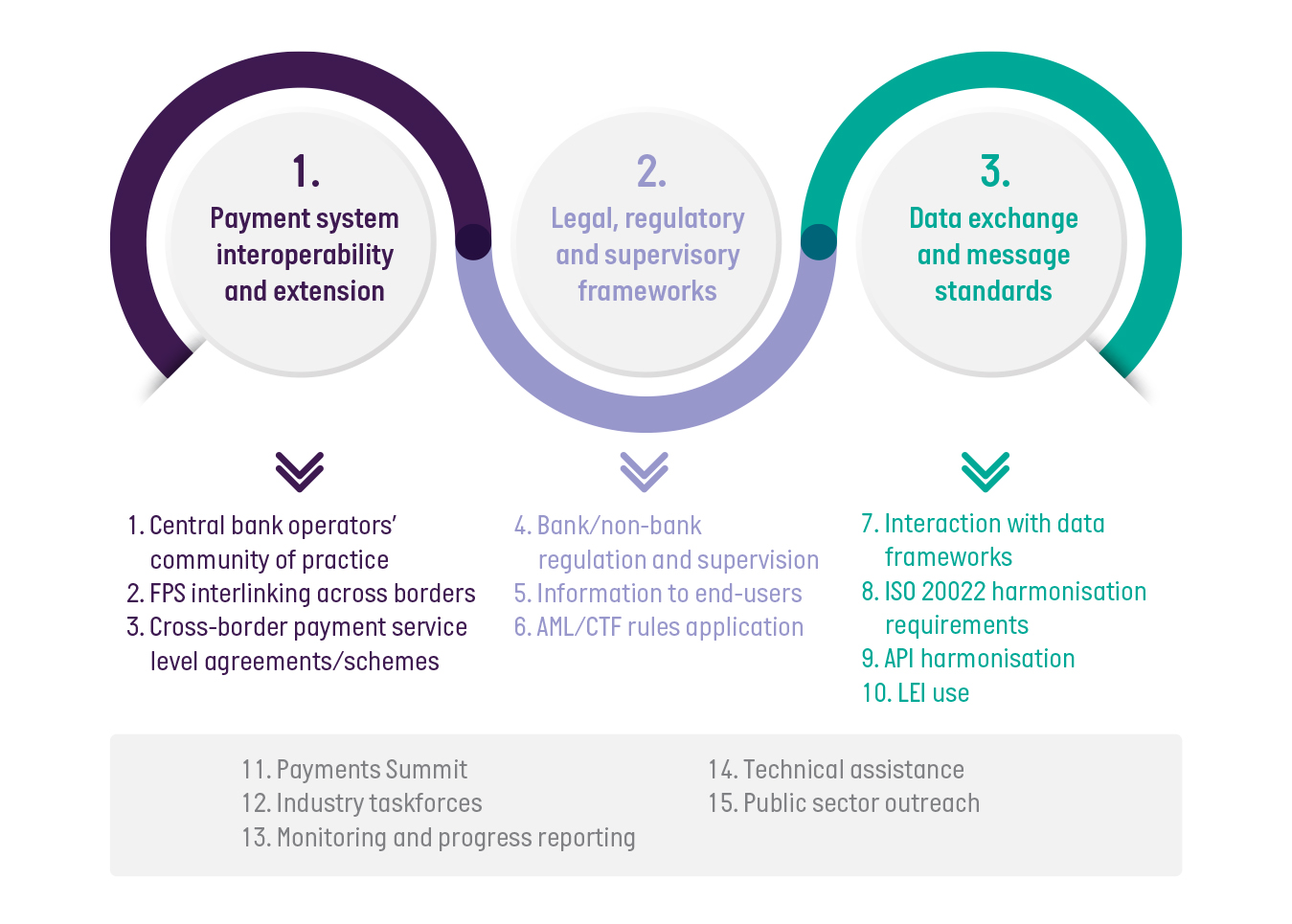
Source: FSB
Cross-Border Payments Advisory Council (CBPAC)
AusPayNet’s CBPAC continues to support and coordinate industry activities that will be key to successfully implementing the G20 Roadmap and domestic cross-border payment priorities. The targets outlined in Appendix 1 remain in place.
General round-up
Work continues by the FSB on its 'Priorities for the next phase of work' and 'G20 Roadmap for Enhancing Cross-border Payments: Priority actions for achieving the G20 targets'. The FSB Plenary have released their 2026 Work Plan. The Plenary discussed the progress report, published in October 2025, warning that the G20’s targets are unlikely to be met by the end of 2027. Plenary members called for jurisdictional and regional action plans to address challenges and emphasised the need to continue to engage with the private sector to drive improvements. The FSB remains fully committed to achieving the Roadmap targets and this was reiterated by the Chair of the FSB in November in his letter to G20 Leaders. He went further in his comments to the FSB Payments Summit held in March 2026. To summarise, in the first instance the expectation is that the public sector should develop:
- Jurisdictional Action Plans to support implementation of the FSB’s guidance and international recommendations;
- Regional Action Plans to support the uplift of regions that have started from a more difficult baseline; and
- A review of the implementation of FSB recommendations on data frameworks and bank and non-bank regulation and supervision, which will take place in early 2027.
The FSB emphasised that further innovation and infrastructure development is required as well as extending real-time gross settlement (RTGS) systems’ operating hours. There is also a need to reduce the regulatory and compliance burden without diluting standards. Finally, the commitment and collective actions of the private sector in terms of delivery are now a priority.
The Bank for International Settlements (BIS) published Bulletin No 119, Enhancing cross-border payments: state of play and way forward in December 2025. It notes that there has been modest progress at both the payment system level and in end user outcomes. This progress is slower than expected and reflects the complexity of payment platform structures, inconsistent and intermittent private sector support, and the emergence of a more complex geopolitical and technological landscape. The envisaged six-year timetable has been an underestimation of the time required to address far-reaching and complex adjustments required to be executed globally. This was echoed by the Committee on Payments and Market Infrastructures (CPMI) Brief No 10 Moving on up: Results of the 2024 cross-border payments monitoring survey.
Taskforce progress
The reconstitution of membership of the CPMI and FSB Taskforces is now complete, and Australia has expanded its participation in these taskforces, with AusPayNet now taking an active role alongside some of our Members.
Payment System Interoperability and Extension (PIE) Taskforce
Following the November CPMI PIE Taskforce meeting held in Basel, the relevant Task Teams have been formed and have started their work. A summary of their initial deliberations follows:
Task Team 2: Promoting Fast Payments Systems met several times in the first quarter to discuss and agreed its scope of work for 2026. There were significant discussions on the potential way forward. The proposal is to redo the inventory of Fast Payment Systems to further catalogue those with one-leg out capabilities. Scoping of the task, including definition of one-leg out, will be forthcoming. The target date for collation is the end of Q2 2026.
Task Team 3: Fostering ISO 20022 Harmonisation met in late January 2026. They are in the midst of defining an ambitious new phase of work that moves the focus from alignment to effective use. They will be reviewing data elements such as service level agreements, local instruments, category purpose, and regulatory reporting.
Task Team 4: Promoting the use of pre-validation Application Programming Interfaces (APIs) held its inaugural meeting in January. There was considerable debate as to the scope of work to be undertaken with no final agreement. Additional meetings will clarify the scope of inclusion of what constitutes pre-validation which will form the basis of further work to be undertaken.
Legal, Regulatory and Supervisory (LRS) Taskforce
The LRS Taskforce met in December 2025, with the FSB providing a summary of initiatives and relevant publications, such as the Key Performance Indicators. The FSB noted that its priority for 2026 will be to consider what, if any, additional policy work is needed to support enhanced transparency in cross-border payments.
Transparency in cross-border payments was discussed amongst participants with a range of divergent approaches taken by many jurisdictions. Some approaches to transparency are strongly rooted in customs, customer preference and norms within jurisdictions suggesting that one-size-fits-all may not be the best outcome. It was noted by some participants that some of their customers are asking for customs and duties to also be made visible for merchant and trade payments. The preference expressed by most participants was for a ‘no surprise’ approach, this being that the sender has visibility as to what the beneficiary is to receive.
The OECD is continuing its work on transparency in retail cross-border payments and remittances. It is collating responses to its survey, with a draft summary having been supplied to the LRS Taskforce for feedback in February. The final report will be available in Q3 2026.
Data exchange and message standards
Advisory group to the Forum on Cross-Border Payments Data
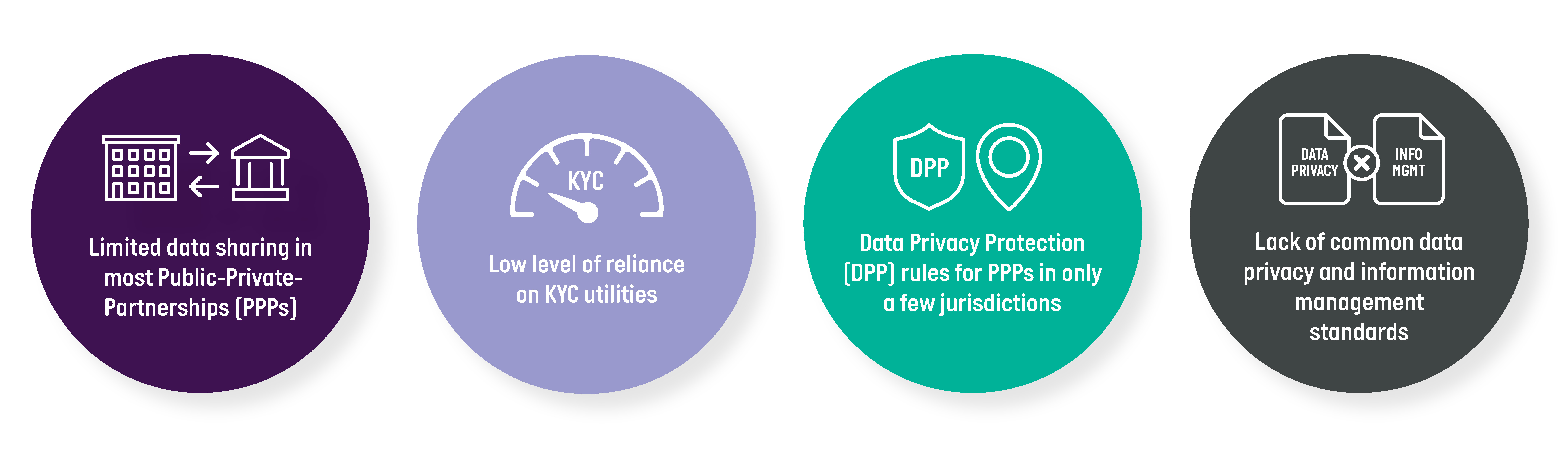
The FSB Forum on cross-border data and Advisory Group held a two-day session in December. The Financial Action Task Force (FATF) provided an update on their work on data-related issues and their project on ‘Information sharing, partnership and data protection’. The objectives are to explore efficient avenues for information sharing and partnerships, building on global experience and emerging forms of information sharing, while respecting fundamental rights. The first draft will be discussed at the upcoming FATF Plenary, with the final report due for adoption and publication in June 2026. FATF will consider at a later stage whether private sector engagement will follow. Preliminary findings are fourfold:
- Most Public-Private-Partnerships (PPPs) focus on strategic information; operational data sharing is limited due to privacy issues, especially around personally identifiable information (PII) and financial data.
- Low level of reliance on Know-Your-Customer (KYC) utilities such as joint or national repositories, influenced by uncertainty around data protection and legal access.
- Only a few jurisdictions have specific Data Privacy Protection (DPP) rules for their PPPs. In most cases, jurisdictions rely on general privacy laws combined with anti-money laundering (AML) exemptions (despite this being advantageous from an anti-money laundering and counter-terrorism financing (AML/CTF) perspective), mentioning some legal uncertainty.
- Lack of common data privacy and information management standards – real or perceived – represents a barrier to more cross-border information sharing, and particularly so for operational information.
It was noted that some jurisdictions, such as the UK, explicitly recognise and allow for sharing of data.
The BIS Innovation Hub introduced Project Nadim which is designed to assess the feasibility of real-time cross-border sharing of fraud patterns in a common language for faster detection and preventative action. Project Nadim will involve partners and contributors such as the Monetary Authority of Singapore, Bank of Thailand, FCA, FSB, FATF, Iberpay, Google and Mastercard.
Other
The Department of Home Affairs have published their AML/CTF Transitional Rules 2026. These transitional rules have been put in place by the Minister for Home Affairs to support the smooth implementation of the AML/CTF reforms.
We also note AUSTRAC’s recent amendments to the AML/CTF Rules. These additional transitional rules will allow a period of time for reporting entities to adjust their business and processes to certain obligations, while still managing their money laundering/terrorism financing (ML/TF) risk.
The International Monetary Fund (IMF) is continuing its engagement with AUSTRAC and other government authorities, as well as the Pacific Islands, with a focus on AML/CTF supervisory and regulatory measures to facilitate payments and correspondent banking services. They are particularly interested in how streamlining AML/CTF requirements in low-risk payment corridors can assist in achieving better payment outcomes for the Pacific Islands.
We look forward to working with you through 2026.
Contact:
David O’Mahony
Business Analyst, AusPayNet
Email: domahony@auspaynet.com.au
Please reach out if you would like further information or if there are any specific topics that you would like us to cover in future newsletters.
Appendix 1
| Wholesale | Retail (e.g. B2B, P2B/B2P, Other P2P3) | Remittances | |
| Cost | No Target Set | Global average cost of payment to be no more than 1%, with no corridors with costs higher than 3% by end-2027 | Reaffirm UN SDG: Global average cost of sending $200 remittance to be no more than 3% by 2030, with no corridors with costs higher than 5% |
| Speed | 75% of cross-border wholesale payments to be credited within one hour of payment initiation or within one hour of the pre-agreed settlement date and time for forward dated transactions and for the remainder of the market to be within one business day of payment initiation, by end-2027. Payments to be reconciled by end of the day on which they are credited, by end-2027. | 75% of cross-border retail payments to provide availability of funds for the recipient within one hour from the time the payment is initiated and for the remainder of the market to be within one business day of payment initiation, by end-2027. | 75% of cross-border remittance payments in every corridor to provide availability of funds for the recipient within one hour of payment initiation and for the remainder of the market to be within one business day, by end-2027 |
| Access | All financial institutions (including financial sector remittance service providers) operating in all payment corridors to have at least one option and where appropriate, multiple options(i.e. multiple infrastructures or providers available) for sending and receiving cross-border wholesale payments by end-2027 | All end-users (individuals, businesses (including MSMEs) or banks to have at least one options (i.e. at least one infrastructure or provider available) for sending or receiving cross-border electronic payments by end 2027 | More than 90% of individuals (including those without bank accounts) who wish to send or receive a remittance payment to have access to a means of cross-border electronic remittance payment by end-2027 |
| Transparency | All payment service providers to provide at a minimum the following list of information concerning cross-border payments to payers and payees by end-2027: total transaction cost (showing all relevant charges including sending and receiving fees including those of any intermediaries, FX rate and currency conversion charges); the expected time to deliver funds; tracking of payment status; and terms of service. | ||
Source: FSB
Note:
Wholesale Payment: Has a value threshold of US$100,000 or greater
Retail Payment: Has a value threshold of less than US$100,000 but greater than US$200
Remittance Payment: Has a value threshold of US$200 or below